

Medical Oxygen Systems
Engineered Medical Oxygen Infrastructure for Regulated Clinical Environments
Medical oxygen systems support life-critical clinical functions. They must operate continuously, predictably, and in full compliance with medical gas regulations.
Foxolution designs, manufactures, integrates, and supports medical oxygen systems engineered as permanent clinical infrastructure, with defined accountability across their full operating life.
Our systems are deployed in healthcare facilities operating under demanding conditions across Africa, where oxygen supply failure is not an inconvenience — it is a clinical risk.
Clinical Risk Context
In medical environments, oxygen demand is defined by:
· Continuous operation
· Unpredictable surge events
· Zero tolerance for interruption
Intensive care units, operating theatres, emergency departments, and recovery wards depend on stable oxygen availability at all times. Any interruption introduces immediate clinical risk.
Facilities that rely primarily on unmanaged cylinder logistics remain exposed to:
· Delivery delays
· Manual changeover during peak clinical load
· Handling and storage risk
· Limited visibility of system resilience
Medical oxygen must therefore be engineered as a resilient, governed utility — not managed reactively as a supply chain.

System Architecture
Generation → Storage
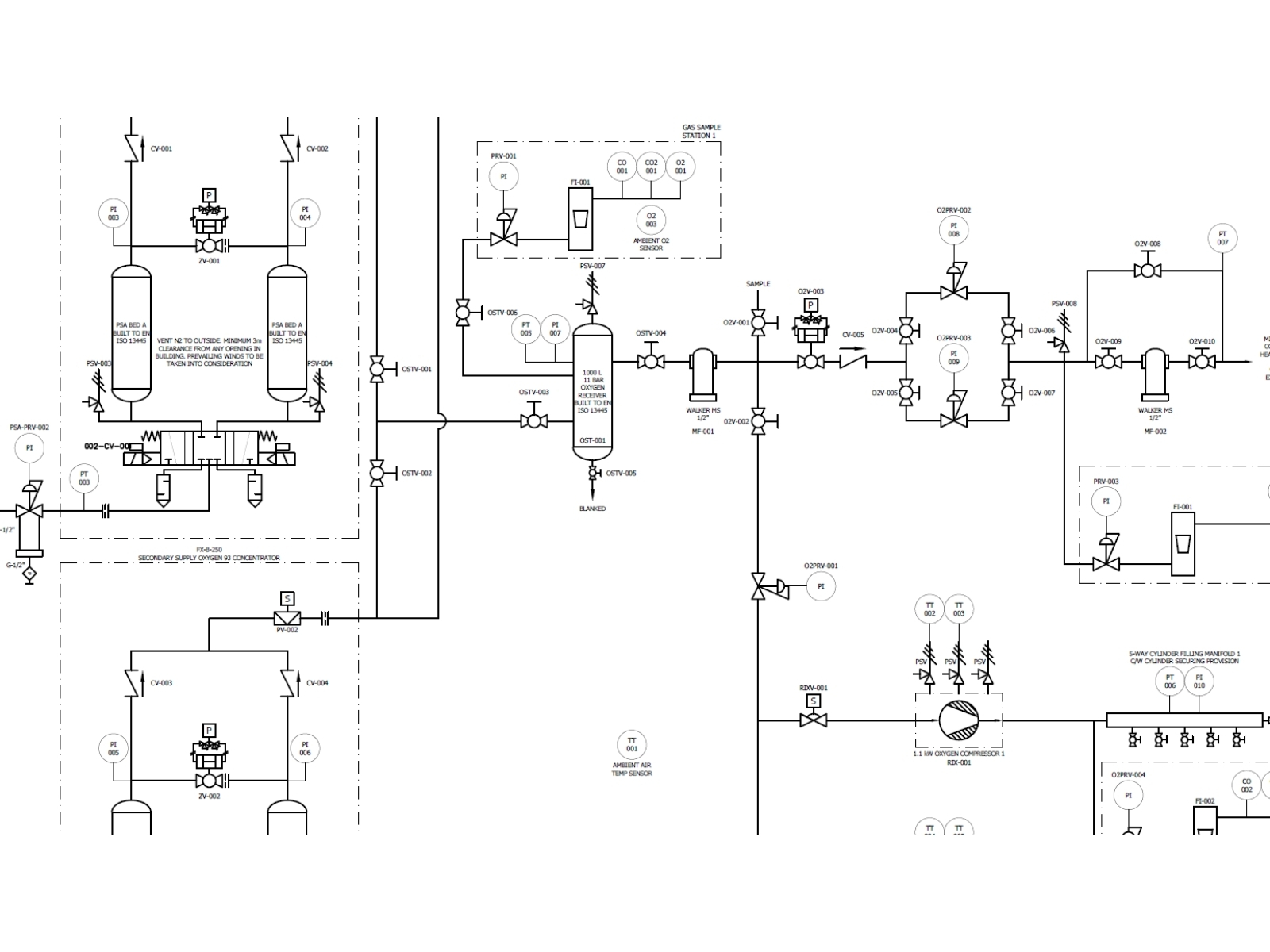
Foxolution medical oxygen systems are engineered as integrated architectures, not collections of equipment.
Each system is developed around two tightly controlled layers, defined by clinical risk, operating continuity, and long-term serviceability.
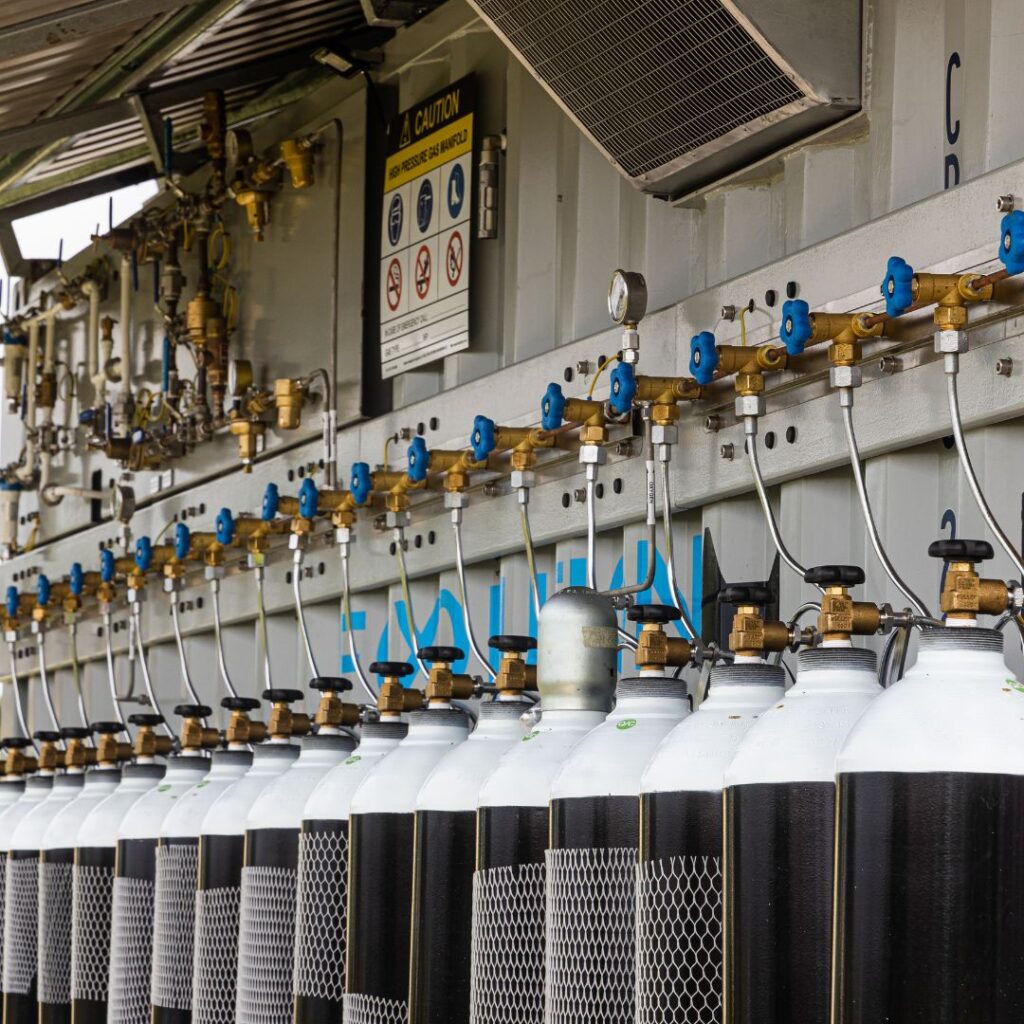
Generation
On-site oxygen generation is sized for sustained clinical demand, not nominal averages. Capacity is defined using conservative duty assumptions and a verified redundancy philosophy aligned to clinical risk.
System sizing and configuration consider:
· Continuous base-load operation
· Unpredictable clinical surge events
· Maintenance access without loss of supply
Storage
Intermediate storage and buffering are engineered to:
· Stabilise supply during load variation
· Support maintenance without clinical interruption
· Integrate verified backup supply strategies
System architecture decisions are governed by clinical risk, facility constraints, and lifecycle accountability — not catalogue-driven configurations.
Oxygen Supply Options
Selecting the Appropriate Medical Oxygen Supply Philosophy
Medical oxygen supply is not a technology choice in isolation. It is a function of clinical risk, scale, infrastructure complexity, operational capability, resilience requirements, and regulatory context.
Within medical environments, oxygen supply strategies are applied conservatively and deliberately. Different facility sizes, demand profiles, infrastructure maturity levels, and risk tolerances require different engineering architectures.
Foxolution engineers and supports three governed medical oxygen supply philosophies, selected and applied according to application-specific requirements:
· Direct-supply systems
· Cylinder-based systems
· Hybrid direct-and-cylinder systems
Each approach is valid when correctly engineered, governed, and aligned to the clinical duty envelope of the facility.
The role of Foxolution’s engineering team is not simply to provide equipment, but to determine when each philosophy is appropriate — and when it is not.
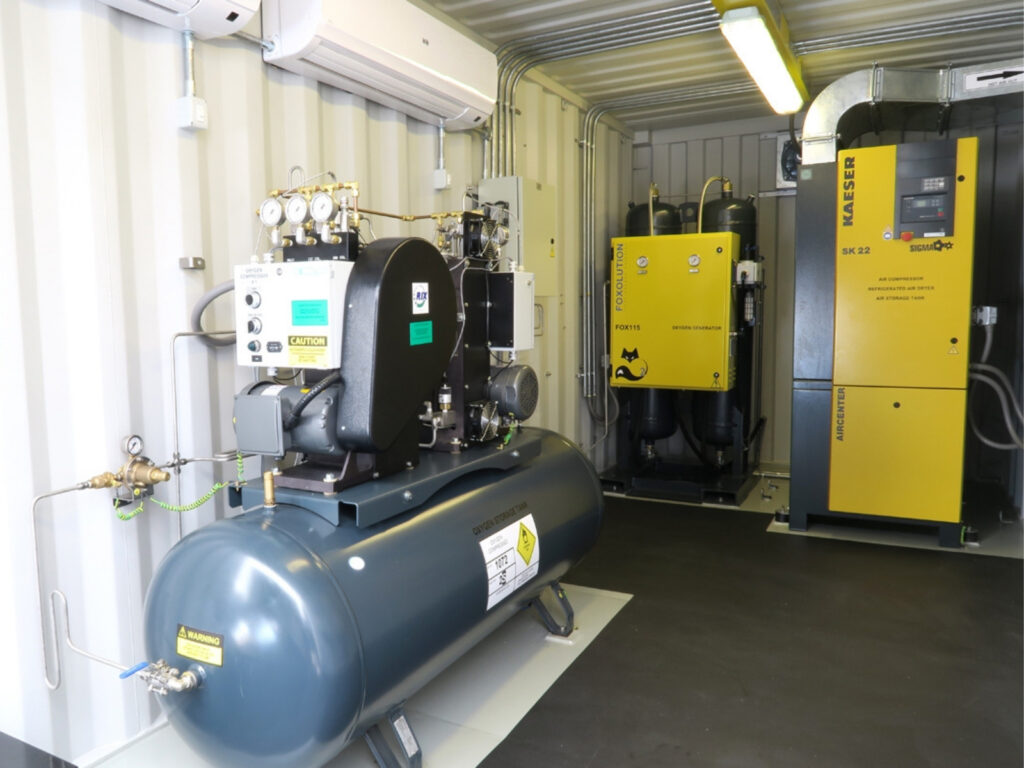
Supply Strategy Context
Direct, Cylinder-Based, and Hybrid Systems
Medical oxygen infrastructure may be delivered through three structured approaches.
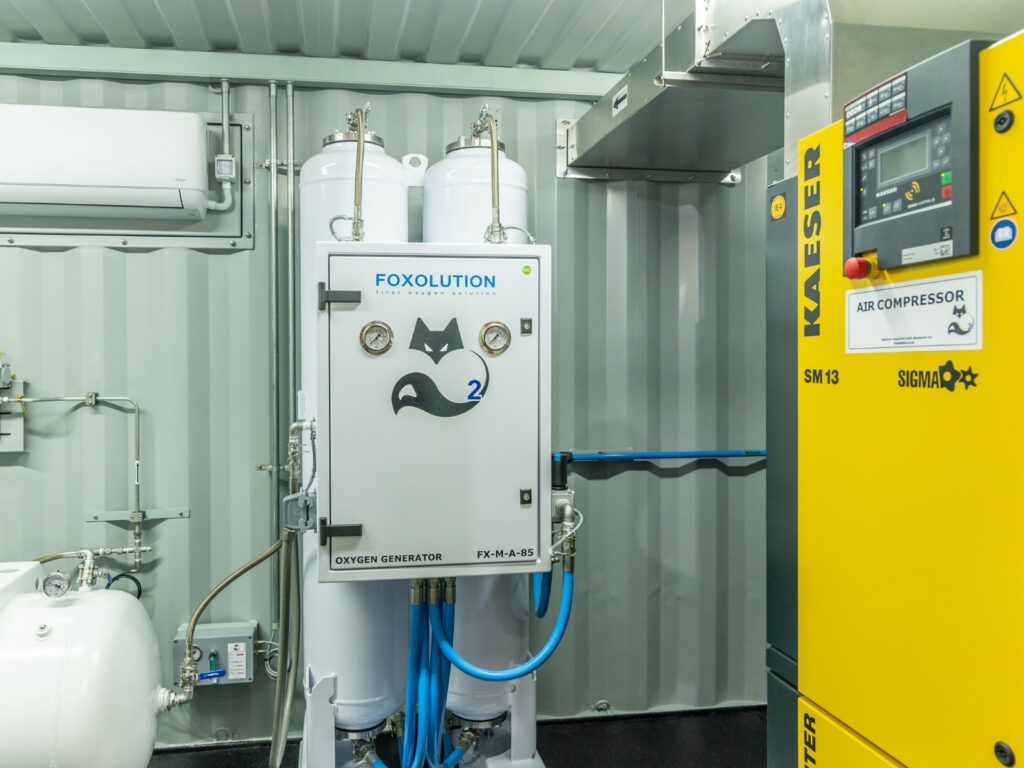
Direct-Supply Systems
Continuous oxygen delivery into the medical gas pipeline infrastructure
In this configuration, oxygen is generated on site and supplied directly into the facility’s medical gas pipeline network as a governed clinical utility.
This approach is appropriate where:
· Oxygen demand is sustained or high
· Clinical areas are numerous or operationally critical
· Automatic source switching and redundancy can be engineered and maintained
· Manual cylinder handling would introduce operational or safety risk
Direct-supply systems allow oxygen to function as a permanent, continuously governed clinical service, reducing dependence on manual handling and distribution.
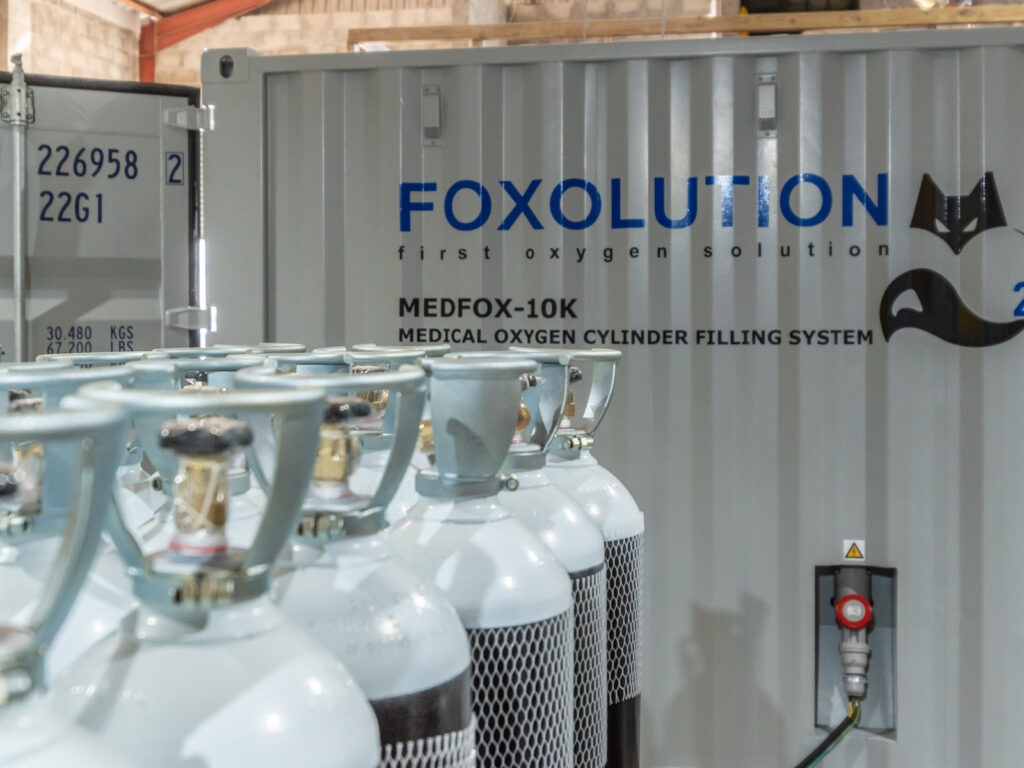
Cylinder-Based Systems
Centralised generation with controlled manifold distribution
In smaller facilities, lower-demand environments, or sites where full pipeline integration would be disproportionate, oxygen may be generated centrally and filled into cylinders.
In this model:
· Oxygen is generated on site
· Cylinders are filled under controlled conditions
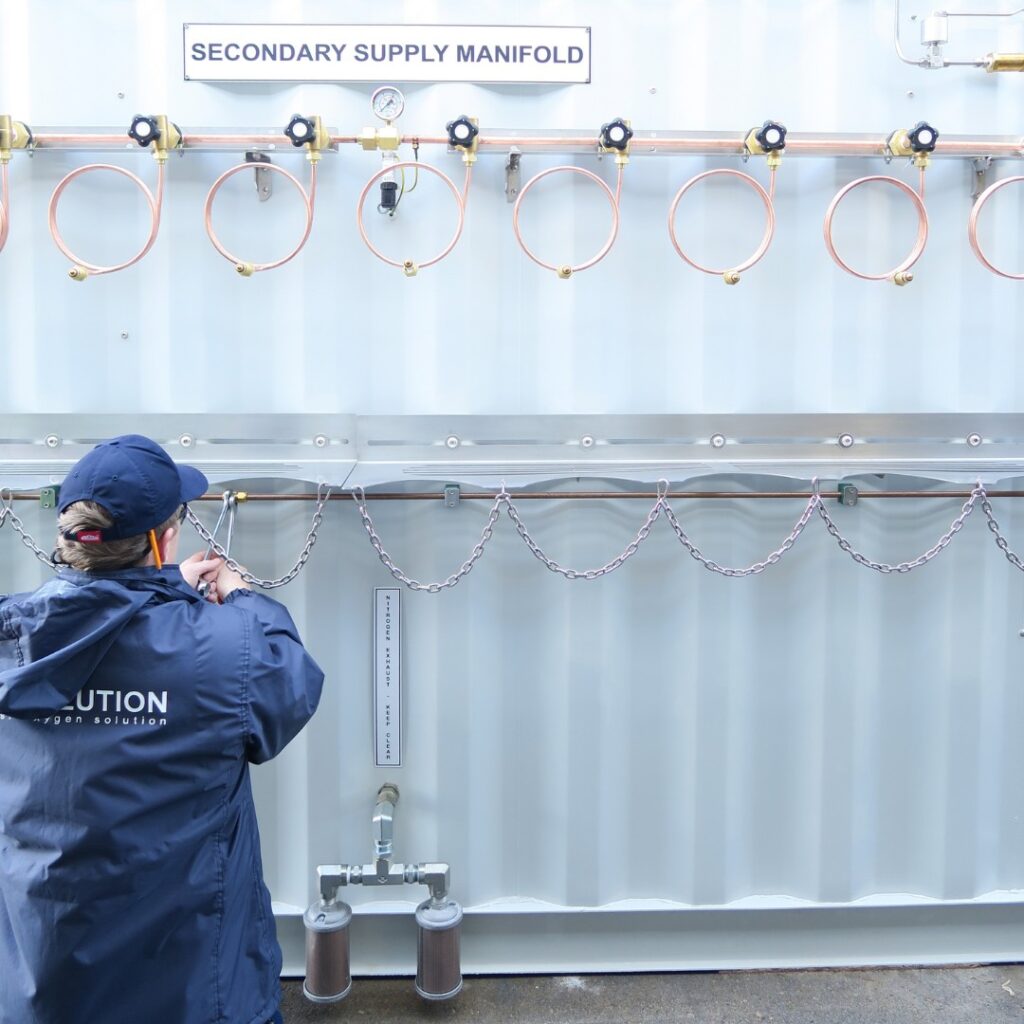
· Filled cylinders are connected to compliant manifold systems supplying the facility
This approach is appropriate where:
· Demand is intermittent or relatively low
· Facility infrastructure is limited or distributed
· Full direct-supply architecture would introduce unnecessary complexity
· Clinical risk can be effectively managed through governed cylinder handling and changeover
When correctly engineered and governed, cylinder-based systems provide reliable supply without the overhead of complex pipeline-driven redundancy architectures.

Hybrid Direct-and-Cylinder Systems
Integrated resilience through dual supply philosophy
In many healthcare environments — particularly where grid stability or logistics reliability is uncertain — a hybrid architecture provides the highest level of operational independence.
In this configuration:
· Oxygen is generated on site and supplied directly into the medical gas pipeline
· A defined portion of production capacity is dedicated to in-house cylinder filling
· Cylinders are retained as structured reserve supply and decentralised backup
This configuration enables:
· Immediate on-site backup without reliance on third-party deliveries
· Continuity during maintenance events or temporary plant interruption
· Peak demand buffering
· Distribution to satellite wards, remote buildings, or associated clinics
· True operational independence with controlled redundancy
Hybrid systems are frequently the most resilient architecture where clinical risk tolerance is low and supply continuity must be assured under variable infrastructure conditions.
PSA (Pressure Swing Adsorption)
Core Production Technology for On-Site Medical Oxygen
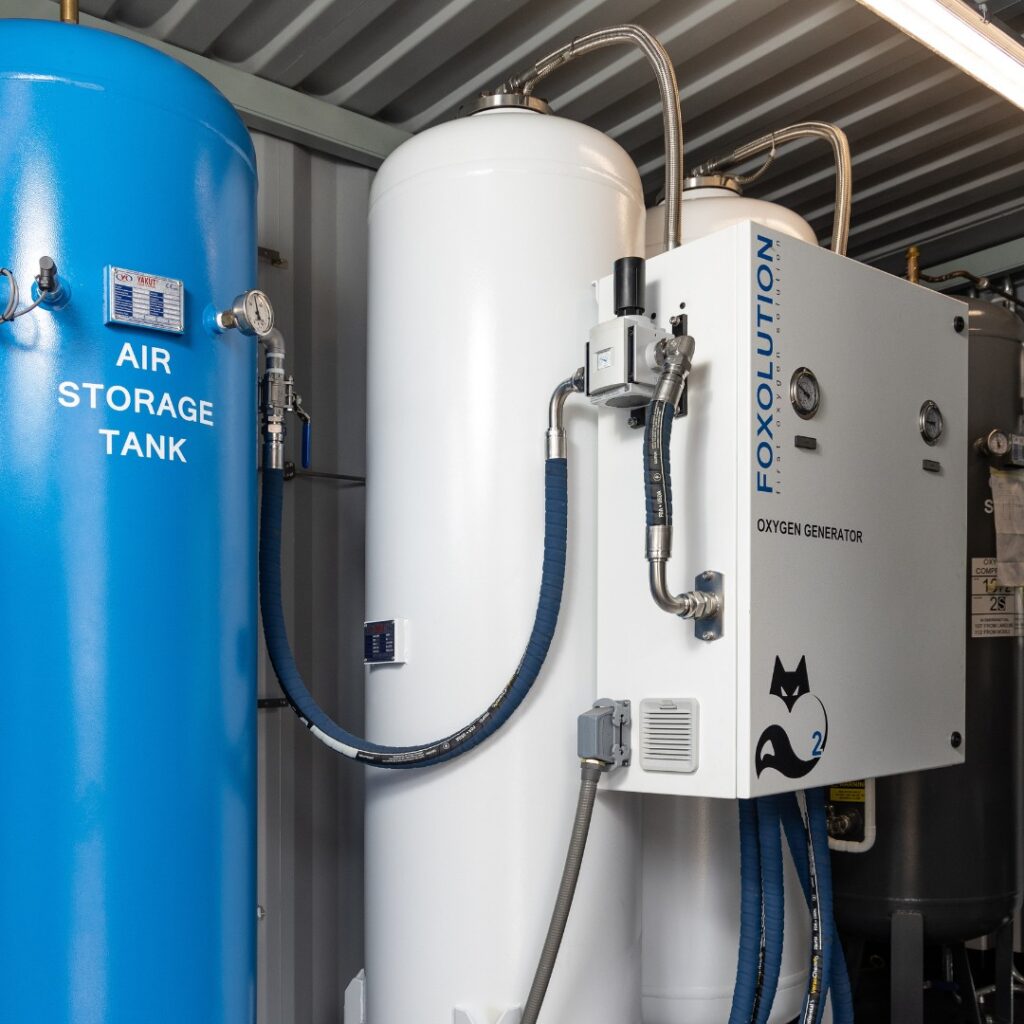
PSA technology forms the core oxygen production method behind direct, cylinder-based, and hybrid systems engineered by Foxolution.
The distinction between supply philosophies is not the technology itself — it is how that technology is applied and governed within the facility’s clinical infrastructure.
PSA systems are engineered and validated against defined clinical duty envelopes, including:
· Surge behaviour
· Redundancy logic
· Controlled turndown capability
· Defined primary and reserve philosophy
Regardless of delivery method, PSA-based systems incorporate:
· Medical-grade oxygen quality control
· Structured source changeover logic
· Defined operational responsibility
· Compliance with applicable medical gas standards
LOX (Liquid Oxygen)
Bulk Oxygen for Primary, Interim, or Integrated Hybrid Roles
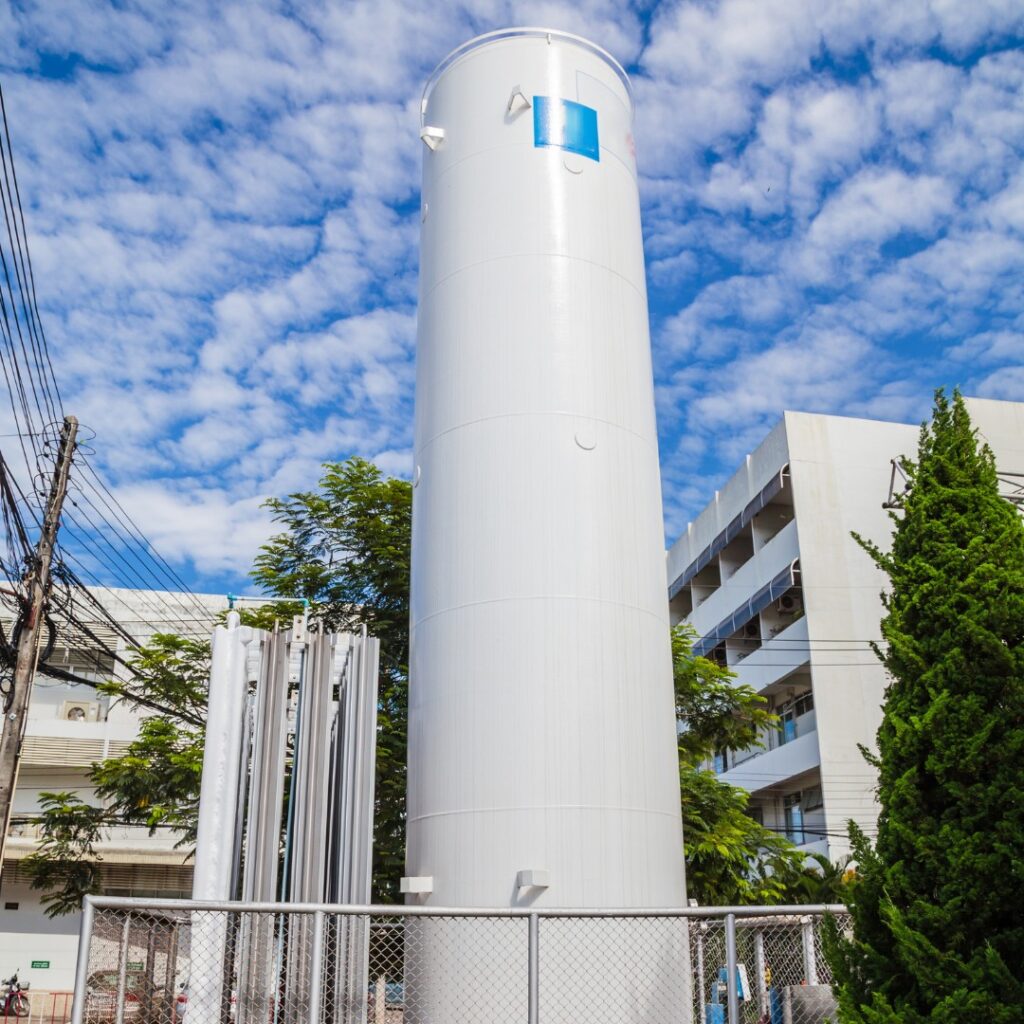
Liquid oxygen (LOX) remains appropriate in specific clinical and logistical contexts.
Foxolution engineers and integrates LOX-based systems where bulk liquid supply is appropriate to facility scale, logistics governance, and lifecycle risk management.
Within Foxolution medical oxygen strategies, LOX may serve as:
· Primary supply for large, centralised facilities with reliable bulk delivery logistics
· Interim supply during phased installation or commissioning of on-site generation
· Integrated backup within a PSA–LOX hybrid architecture, providing verified reserve capacity or short-term peak coverage
Where PSA and LOX are combined, integration is deliberately engineered to preserve redundancy logic, compliance, and long-term system integrity.
LOX is applied where logistics reliability and site governance can be clearly managed. It is not treated as a default solution, but as a governed component within a broader supply strategy.
Engineering Principle
There is no universally “best” medical oxygen supply method.
There is only an appropriate, engineered supply philosophy aligned to:
· Clinical risk
· Demand scale
· Infrastructure maturity
· Operational capability
· Lifecycle governance
Foxolution designs medical oxygen systems around these principles — ensuring the selected supply architecture is resilient, compliant, sustainable, and appropriate for the facility it serves.

Compliance & Standards
Medical oxygen systems engineered by Foxolution are designed, manufactured, and installed in accordance with applicable medical gas standards and regulatory frameworks, including:
· ISO 7396-1 (Medical gas pipeline systems)
· WHO medical oxygen guidance
· Relevant SANS standards and pressure equipment regulations
· Oxygen cleaning and materials compatibility requirements
· Quality management systems aligned with ISO 9001
· Medical device manufacturing controls (ISO 13485 in progress)
Compliance is designed into the system, documented, and verified. It is not assumed or implied.
Commercial & Delivery Models
Medical oxygen infrastructure carries clinical risk beyond capital cost.
Depending on facility scale, governance structure, and regulatory environment, medical oxygen systems may be delivered under:
• Capital purchase with structured lifecycle support
• Long-term lease aligned to compliance governance
• Foxolution-operated medical oxygen infrastructure
In operated or lease models, Foxolution retains defined responsibility for:
• System availability
• Preventive maintenance execution
• Compliance integrity
• Performance verification
These structures are applied where clinical continuity, regulatory accountability, and long-term system integrity outweigh the preference for asset ownership.
Commercial structure is defined only after technical and compliance alignment has been established.
Lifecycle Support
Service, Training, and Long-Term Accountability
Medical oxygen infrastructure remains a clinical asset long after commissioning.
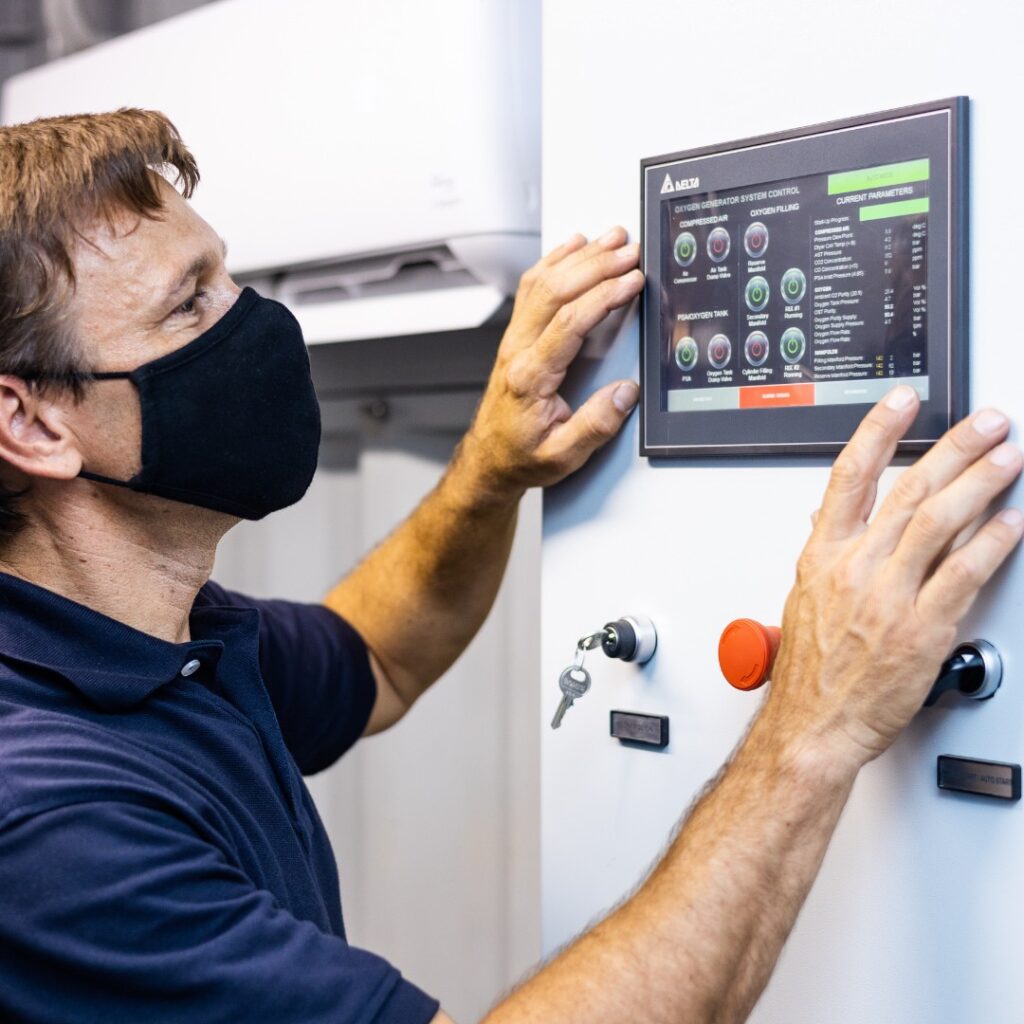
Foxolution supports medical oxygen systems across their full lifecycle, including:
· Front-end demand assessment and system definition
· Installation, commissioning, and verification
· Operator and maintenance training
· Periodic audits and performance assessments
· Preventive and corrective maintenance
· Remedial works, upgrades, and capacity expansion
We retain accountability for system performance beyond handover.
Technical Reference Downloads
For engineering consultants, healthcare planners, and project stakeholders requiring structured reference material, Foxolution provides formal technical reference guides to support medical oxygen system planning and evaluation.
These documents outline system architectures and engineering considerations.
They are not marketing brochures and do not replace project-specific engineering assessment.
Medical PSA Oxygen Generator Platforms
Technical overview of Foxolution’s medical PSA oxygen generator configurations, including capacity ranges, operating principles, redundancy strategies, and typical hospital deployment contexts.
Medical Oxygen Cylinder Filling Architectures
Engineering overview of centralised PSA-based cylinder filling systems, including controlled filling manifolds, storage integration, and governed cylinder supply strategies for healthcare facilities.
All system selections remain subject to application-specific engineering validation and compliance verification.
Discuss Your Medical Oxygen Requirements
Every healthcare facility operates under its own clinical, regulatory, and operational constraints.
Foxolution engages directly with clinical engineers, consultants, and project teams to assess medical oxygen requirements and define an appropriate, compliant, long-term oxygen strategy suited to the facility.
Discuss Your Application
Technical discussions only. No obligation. No sales pressure.